
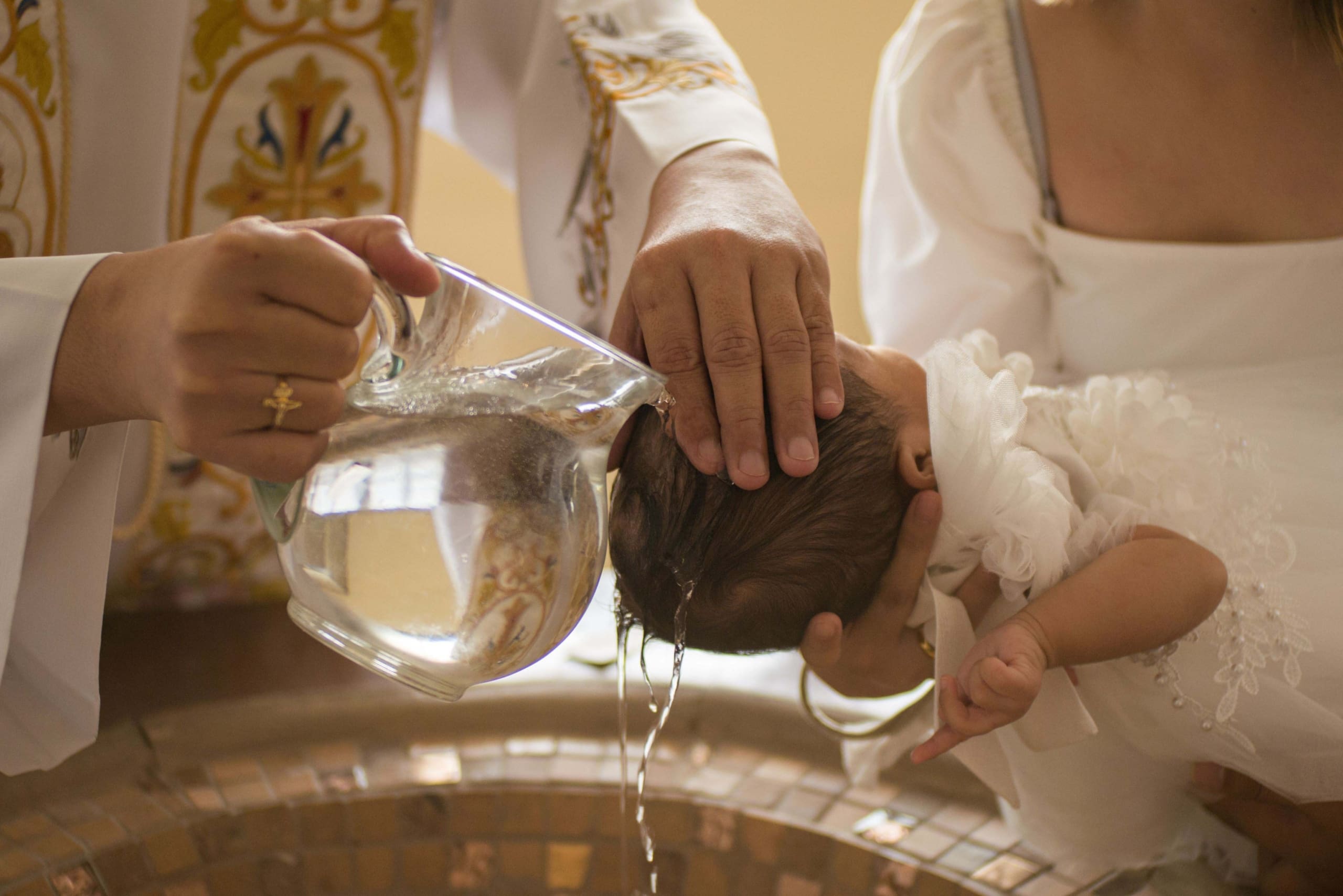
A baptism is such a joyful moment, watching a family welcome a new baby into the faith community. But behind the scenes, there is a growing challenge that many parishes are facing: it is becoming surprisingly hard to find eligible godparents.
I experienced this firsthand very recently. A friend asked me to be the godfather for his daughter. I was deeply honored and, without hesitation, I said yes. I was excited to support my friend and his child on her spiritual journey. But when I went to my parish for the official paperwork, the answer was “no.”
It was a frustrating experience because, on paper, I am exactly who you would expect a godparent to be. I am 38 years old and have been a Catholic my entire life. I have all my sacraments—I was baptized, confirmed, and I’ve received my First Communion.
The “no” came down to my marriage. My wife is Lutheran, and when we got married, we chose to have a legal ceremony at the Milwaukee courthouse. Afterward, we celebrated with a blessing of our marriage led by my wife’s sister, who is an ELCA Lutheran Pastor. It was a deeply meaningful ceremony for our family, especially because having a family member perform the blessing was so personal. She said the most beautiful words during our celebration, and it’s a memory I cherish.
When I explained this to the contact at my parish, they offered a solution: I could “fix” the situation by getting married in the Catholic Church. But for my family, that isn’t an option. My wife doesn’t want to pursue that, and I respect her wishes and her own faith background.
What’s really interesting—and a bit sad—is the “why” behind her family’s history. Her family actually used to be Catholic, but they became Lutheran generations ago because her grandfather got divorced and was told he was no longer welcome at his Catholic church. Because they felt pushed out, the entire family switched to a different Christian branch. Now, decades later, I’m hitting a similar wall.
My situation is a perfect example of why many parishes are seeing a “godparent shortage.” It’s not that people don’t care; it’s that there is a massive gap between the lives of modern families and the strict requirements of Church law. To be a godparent, you must be “leading a life of faith” that aligns with every rule. In the eyes of the Church, even if you are at Mass (almost) every week, being married at a courthouse is seen as a disqualifier.
This creates a tough situation. Since the 1960s, the number of infant baptisms has dropped significantly. For those who still want to participate, finding a sponsor who checks every single box is getting harder. Many people have drifted away from the Church entirely, and those of us who stay often find that our personal lives—especially in “mixed” marriages with other Christians—don’t perfectly fit the perfect mold.
So, where do we go from here? I don’t think the solution is to throw out the rules, but we also shouldn’t be turning away people who are clearly trying to live a faithful life.
Instead of treating baptism prep like a legal background check, parishes should see it as a chance to welcome people. When a friend asks someone like me to be a godfather, it’s a beautiful moment of connection. It should be used as an opportunity for the Church to show hospitality and understanding, rather than just delivering a rejection that can push families even further away—just like what happened to my wife’s grandfather.
The “godparent shortage” is a sign of how much our culture has changed. Solving it will require a balance of respecting our traditions while showing a lot more heart for the people who are actually showing up and trying to be part of the community.